How to Choose Polycarbonate Sheets for a Greenhouse in Poland
Polycarbonate panels come in a range of thicknesses, internal structures, and surface treatments. Selecting the appropriate specification for Polish growing conditions involves balancing light transmission, thermal performance, structural strength, and long-term durability — factors that interact in ways that are not always obvious from a product sheet alone.
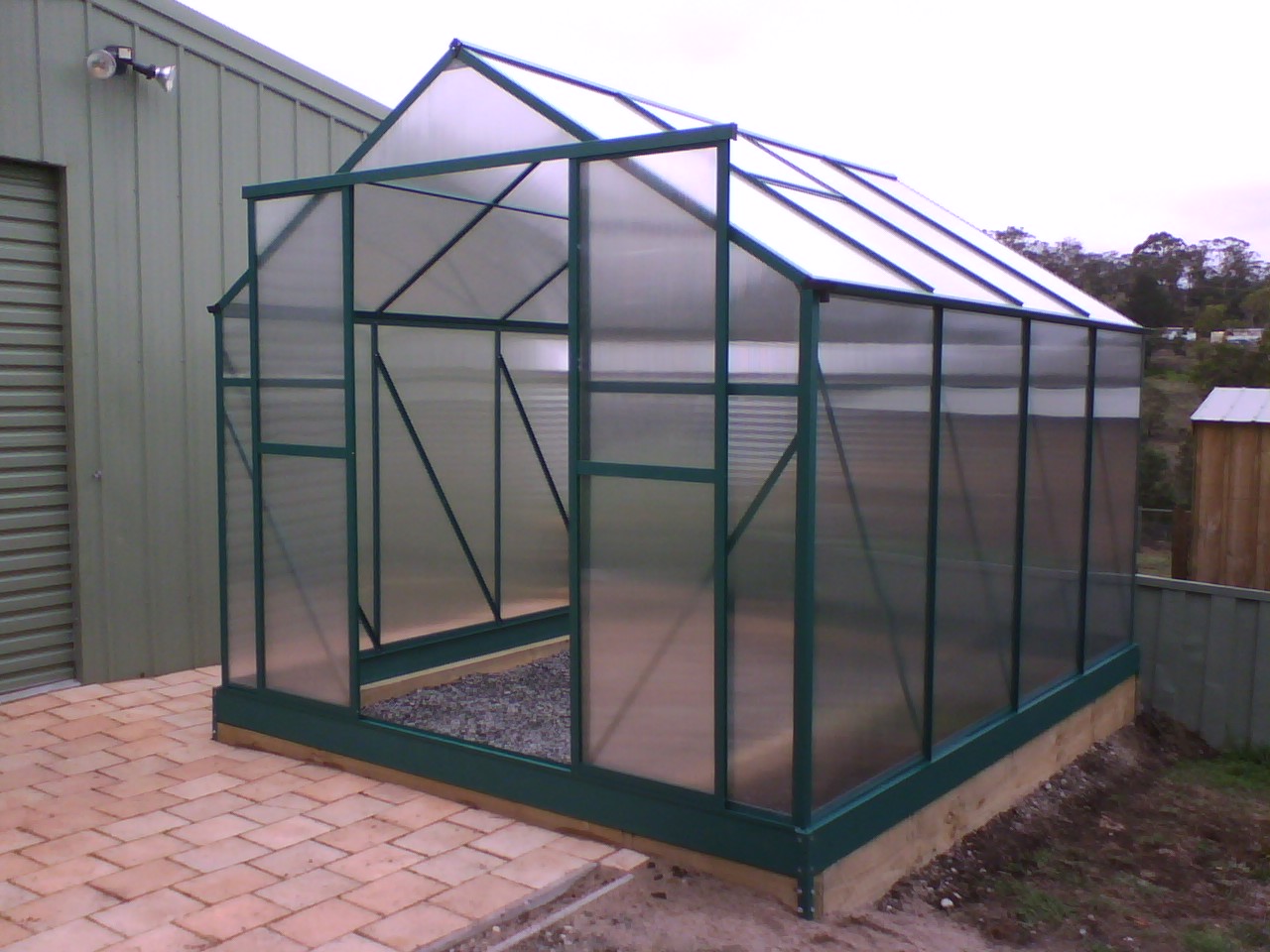
Panel structure: single-wall vs. multiwall
The most fundamental distinction is between single-wall (solid) sheet and multiwall (hollow) sheet. For greenhouse cladding in Poland, multiwall is the standard choice because of its thermal insulation value. A single-wall 4 mm sheet offers essentially no insulation — its U-value is close to that of single-pane glass. Twin-wall (two layers connected by internal flutes) and triple-wall panels reduce heat loss substantially.
| Panel type | Typical thickness | Approx. U-value (W/m²K) | Light transmission |
|---|---|---|---|
| Single-wall solid | 2–4 mm | ~5.5 | ~89% |
| Twin-wall | 6–10 mm | 3.1–2.1 | ~76–82% |
| Triple-wall | 10–16 mm | 2.1–1.6 | ~70–75% |
| Five-wall | 16–20 mm | ~1.5 | ~65% |
U-values above are approximate and vary by manufacturer. Check the specific technical data sheet (TDS) for any product before purchasing. EN 16153 governs the testing methodology for polycarbonate sheet products sold in EU markets including Poland.
Thickness and structural load
In Poland, the relevant snow load zone for greenhouse design depends on location. The country is divided into five snow load zones under PN-EN 1991-1-3, with characteristic ground snow loads ranging from roughly 0.7 kN/m² in lower-lying parts of Masovia to over 3.0 kN/m² in the Tatra foothills and high mountain areas. Panel thickness alone does not determine structural adequacy — span between purlins and frame spacing are equally important variables.
For a standard 4 m span greenhouse in a central Poland zone (roughly 1.2 kN/m² characteristic snow load), 10 mm twin-wall panels on aluminium profiles with purlin spacing not exceeding 500 mm is a commonly used specification. In higher-altitude locations in Małopolska or Podkarpacie, either thicker panels or closer purlin spacing is needed.
UV coating: which face goes outside
Polycarbonate degrades when exposed to ultraviolet radiation — it yellows, becomes brittle, and loses light transmission over time. Manufacturers address this by co-extruding a UV-resistant layer on one or both faces of the panel. Most greenhouse-grade sheets have the UV layer on one face only.
Installing the panel with the unprotected face outward shortens the panel's service life substantially, often reducing it from the stated 10–15 year durability to 2–4 years before visible degradation appears. The UV-protected face is normally marked with a film or printed indicator on the sheet. This marking should be removed only after installation is complete.
Condensate drainage orientation
The internal flutes in multiwall polycarbonate must run vertically on roof panels and horizontally on vertical wall panels to allow condensate to drain out. Installing roof panels with horizontal flutes traps moisture inside the channels, which encourages algae growth and accelerates panel degradation from the inside. Panels are available in two flute orientations; confirm which you have before cutting to length.
Light transmission and spectrum
The light transmission figure on a product sheet (typically expressed as a percentage of visible light) is measured under standard conditions and represents the panel at installation. Over time, UV exposure and surface fouling reduce effective transmission even on UV-protected panels. Clear panels transmit more light but produce hard shadows and some risk of focal hot spots on plant canopy. Opal (white diffuse) or bronze-tinted panels scatter light more evenly but reduce total intensity.
For most vegetable and flower crops in Poland, clear or near-clear twin-wall (76–82% VLT) is the practical standard. Bronze or grey tints are occasionally used in ornamental structures where excessive light is a concern in summer, but this is less common in productive growing contexts.
Profile and fastening systems
Polycarbonate expands and contracts with temperature. A 6 m panel length will expand by roughly 7–10 mm over a 50 °C temperature range. Fastening systems must accommodate this movement.
- H-profile connectors allow panels to slide laterally. The panel edge fits into both sides of the H; no mechanical fastening passes through the panel face. This is the standard approach for joining adjacent panels at their edges.
- F-profile (end cap) seals the flute ends at the top and bottom of each panel to prevent insect ingress and condensate entry. The top end cap should be solid; the bottom cap should be vented to allow condensate to exit.
- Thermal washers are used when screws pass through the panel face. The washer's oversized hole allows the panel to move without the screw point acting as a stress concentrator. Driving a standard screw directly through polycarbonate without a thermal washer creates crack initiation points.
Polish market context
Polycarbonate sheets are widely available from builders' merchants and specialist greenhouse suppliers across Poland. Bricoman, OBI, and Leroy Merlin carry basic 6–10 mm twin-wall in standard 210 cm widths. Specialist greenhouse suppliers (concentrated around the Poznań, Warsaw, and Kraków regions) stock wider ranges including 16 mm and 20 mm five-wall panels and appropriate profile systems. Buying panels without the correct profile system from the same manufacturer can cause fitment problems, as internal dimensions of H and F profiles are not universally standardised.
When comparing prices, check whether the listed price includes the edge profiles. Some suppliers quote panel-only prices; the profiles for a mid-size greenhouse can add 15–25% to the total material cost.
Related guides
- Ventilation sizing for polycarbonate greenhouses
- Winter preparation and snow load management
- About this site